
The two-week pilot: a fixed-scope website offer for an independent optometrist
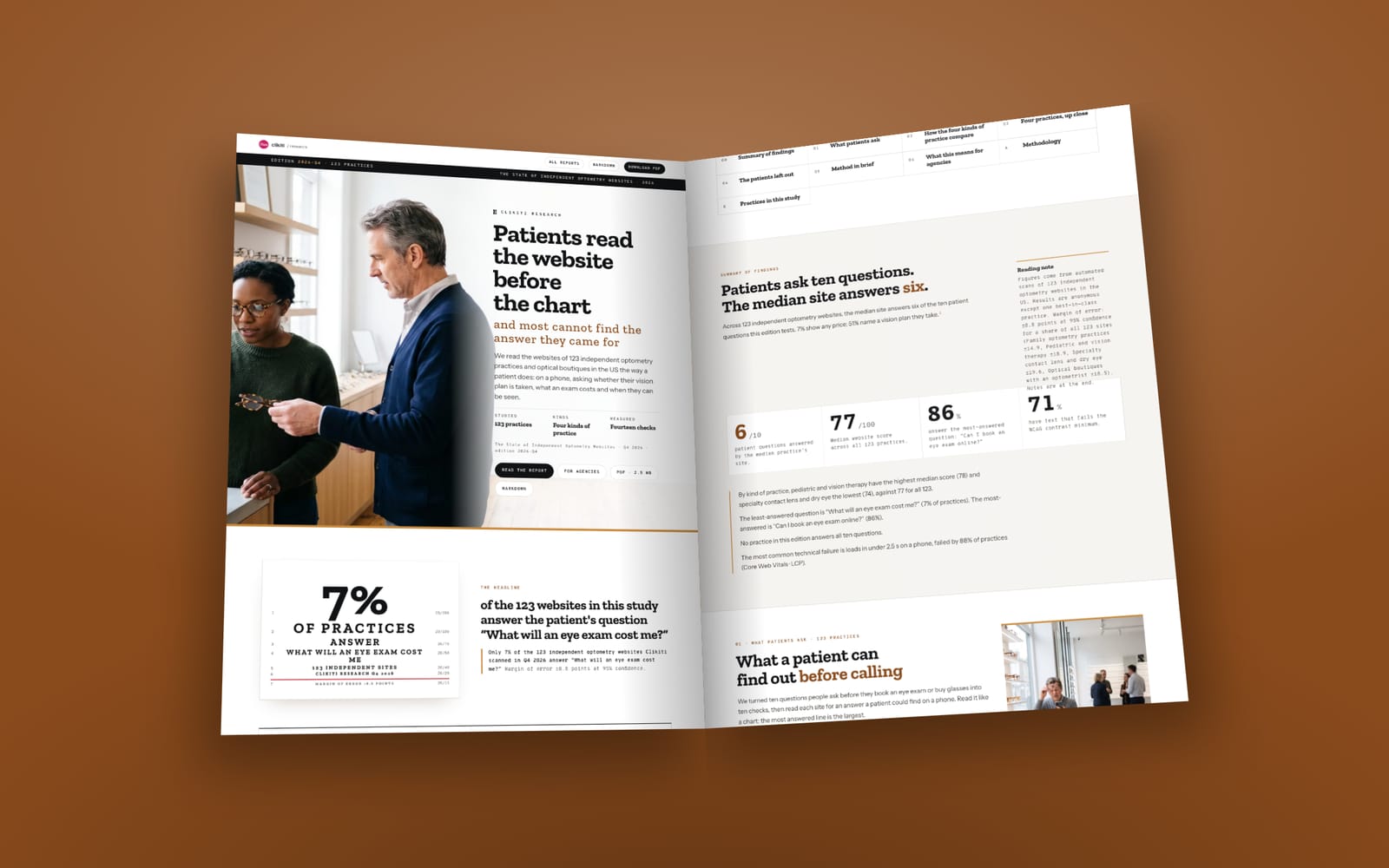
Only 7% of 123 independent optometry websites show a price, and 49% name no vision plan. Here is a small offer an agency can put in front of a practice owner: what ships in week one, what ships in week two, and how both are measured with the study's own checks.
- Only 7% of 123 independent optometry and optical boutique websites show any price, and only 51% name a vision plan they take (Clikiti Research, October 2026).
- 44% never say whether the practice sees eye emergencies or same-day visits, and 67% show no patient reviews.
- A two-week pilot fixes the cheapest of these first, then reruns the same pass rules, so the owner sees the before and after as checks, not opinions.
A practice owner who has been sold a website before is wary of the next one. A redesign is a large, vague promise. A pilot is small and dated: a fixed list of changes, two weeks, and a test at the end that either passes or doesn't. This playbook sets one out for an independent optometry practice or optical boutique.
The scope comes from The State of Independent Optometry Websites 2026, our read of 123 independent practices. The number to open with: only 7% of the sites show any price for an eye exam, a contact lens fitting or a pair of glasses.
of the 123 websites we scanned answer “What will an eye exam cost me?” (a price shown: an exam, a fitting or eyewear).
Why a pilot and not a redesign?#
Because most of what the study finds missing is content, not layout. Of the ten patient questions, the four least answered are price (7% answer), reviews (33%), frame brands (50%) and vision plans (51%). None of them needs a new site. Each one is a fact the practice already holds: a fee schedule, a list of plans the front desk checks every day, frame orders, review profiles.
That makes the pilot cheap to deliver and easy to judge. The study's pass rules are public in the report's methodology, so you can run each one on the prospect's site before you start and again when you finish.
What do you check before you quote?#
Read the prospect's home page and the pages it links to on a phone, and mark each of these pass or fail with a screenshot:
- A dollar amount tied to an exam, a fitting or eyewear (not a discount or an allowance).
- At least one vision or medical plan named, in text or in a logo's description.
- A statement about eye emergencies, urgent or same-day visits.
- Quoted patient reviews, a review widget or review markup.
- A tappable phone number on the home page, and opening hours.
- Three or more frame brands named.
Those six are the pilot. Book online, contact lenses, children's exams and the named doctor are already answered on most sites (73% to 86%), so leave them out unless the prospect fails one.
Share of sites that answer each question
123 websites · Independent optometrists · Q4 2026
Week one: the quick fixes#
The report rates vision plans, urgent visits, contact details and reviews as quick fixes. They ship first.
Vision plans. One page, linked from the home page, that names every plan the practice takes. 49% of sites name none. If the plans are shown as logos, give each one an image description with the plan's name, so screen readers and search engines read it too.
Vision and medical plans we accept. We bill most major vision plans directly, and medical insurance for eye problems such as infections, injuries, dry eye and diabetic eye exams. If your plan isn't listed, call us before your visit and we'll check your benefits for you.
Below it, the list itself, in the practice's own words: each vision plan, then each medical plan.
Urgent visits. 44% of sites never say whether the practice sees eye emergencies. One sentence next to the phone number answers it, written only if it is true.
Red, painful or injured eye? Call us first. We keep time for same-day urgent visits, and most eye infections, scratches and sudden changes in vision can be seen here rather than at urgent care.
Reviews and contact. Add the practice's existing reviews to the home page with Review or AggregateRating markup, and make the phone number tappable with the opening hours beside it. 25% of sites miss the contact line, and 67% show no reviews.
Week two: the content#
Price. The block owners resist most, and the one 93% of sites miss. Ask for the self-pay price of a routine eye exam and of a contact lens fitting, and a starting price for a complete pair of glasses. Starting prices pass as well as exact ones. Publish them on the plans page, under their own heading:
Paying without insurance. If you don't have vision cover, or your plan doesn't cover a service, these are our self-pay prices. Your optometrist will tell you before anything extra is done, such as retinal imaging or a specialty lens fitting, and what it costs.
Then the list, with the practice's own numbers. Where the owner hesitates, the paragraph above answers the objection: the base price is fixed and anything beyond it is agreed first.
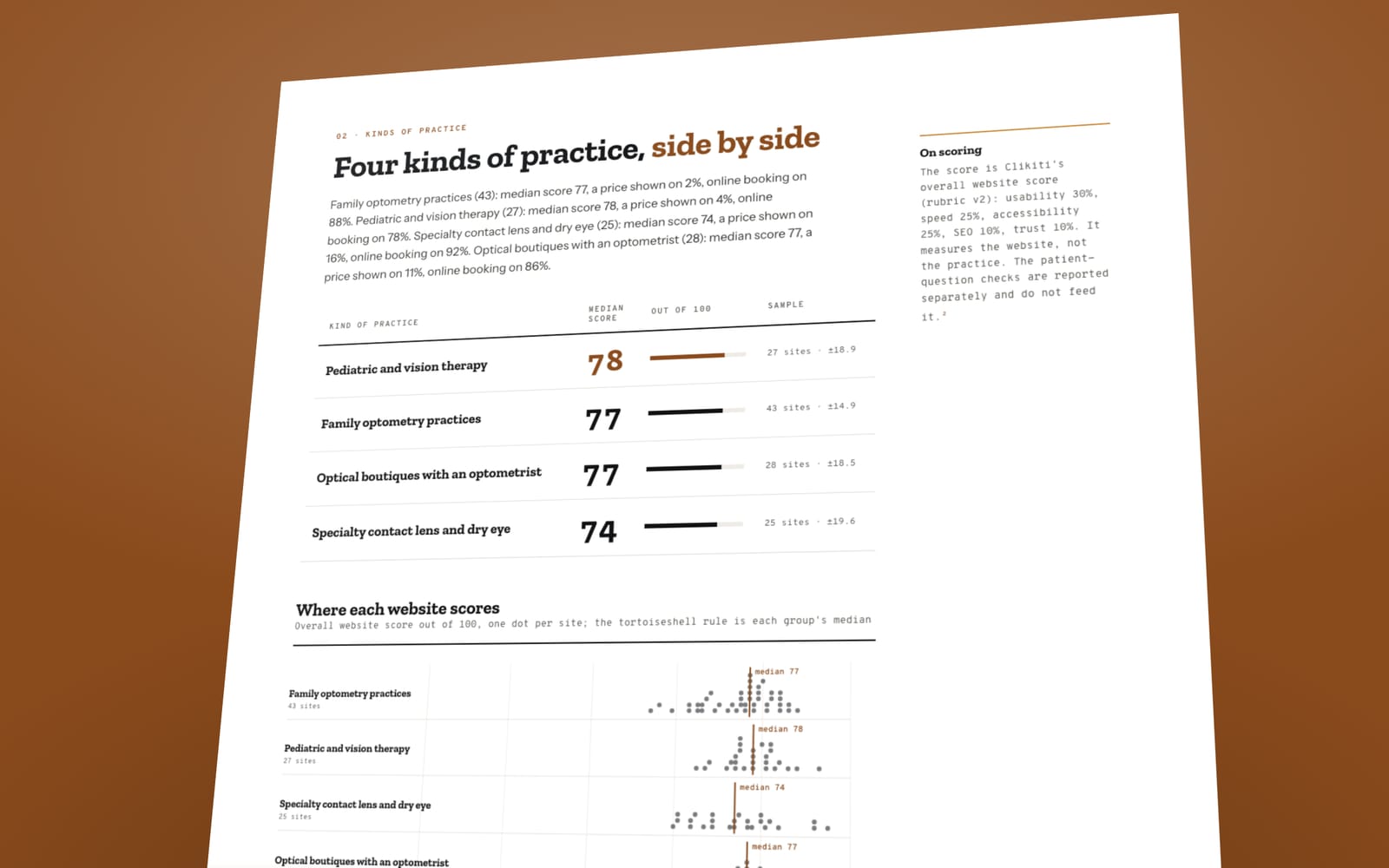
Frames. An eyewear page that names the brands and designers the practice carries, with photographs of the optical. Boutiques already do this on 79% of sites; family practices on 58% and pediatric practices on 19%. For a family practice, it is the page that shows a patient why buying glasses here is better than buying them online.
Contrast, if there is time. 71% of the sites fail the WCAG contrast minimum. On an eye-care site that is worth fixing in the theme while you are in it.
How is success measured?#
Rerun the six checks from the first section on the live site at the end of week two, with the same screenshots. The pilot succeeds when all six pass. Report it to the owner as the before and after, line by line, with the study's share beside each one: "Before: no price, like 93% of independent practices. After: three prices on the plans page."
Then ask the practice to note, for the month after, how many calls to the front desk are about plans and prices. That count belongs to the practice; you don't need to promise a number.
How do you pitch it?
- Open with the vision plan. "Do you take my vision plan? is the first question a patient has, and your site makes them call to ask." 49% of 123 practices leave it to the phone.
- Show the price gap. Only 7% of independent sites show any price. A practice that posts its exam price joins a very short list.
- Sell two weeks, not a website. Six checks, two weeks, measured with the study's own pass rules. If the owner likes the result, the bigger work is an easy next conversation.
"Do you take my vision plan?" is the first question a patient has, and your site makes them call to ask.
For the full chart of all ten patient questions, read line by line: ten patient questions on optometry websites. For a page-by-page approach in another health practice, see the dental insurance page build sheet.
Keep reading
More on optometry and the same problems in other industries

Line by line: ten patient questions on optometry websites, from 86% down to 7%
The intake worksheet: nine questions to ask a wedding venue owner on the first call

Take the class first: a field-visit playbook for pitching an independent gym
How to cite
Clikiti Research (2026, October 15). The two-week pilot: a fixed-scope website offer for an independent optometrist. Clikiti. https://splash.clikiti.com/research/posts/optometry-website-two-week-pilot
Data and license
Every number comes from The State of Independent Optometry Websites 2026 (n = 123). Free to reuse under CC BY 4.0. Credit Clikiti with a link. Plain Markdown
About the images
People in the photographs on this page are AI-generated. No real person, school, firm or practice is shown. Last updated Oct 15, 2026.
One stat. One pitch. Every Tuesday.
A finding from our scans, what it means for the agencies selling to that industry, and the line to open a pitch with. Free.