
The first consultation happens on the website
We read the websites of 125 small law firms in the US the way someone with a legal problem does: on a phone, often under stress, with the questions a client asks first.
100 firms, three practice areas
Twelve checks, each citing a standard
2026-Q4
Part one
The findings
125 websites, read the way a client reads them
Clients ask eight questions. The median site answers four.
Across 125 law firm websites, the median site answers four of the eight client questions this edition tests. 43% say where their lawyers are admitted or licensed to practise; 39% pair a tappable phone number with office hours, 24/7 availability or a response time.1
The questions clients actually ask
We turned eight questions a prospective client asks into eight checks. Each bar shows how many firms answer the question on their site, without making the client call to find out.
What a client can find out
Share of all firm websites answering each question, %
Figure 1. Share of sites that answer each question on the home page or a page it links to, read from the served HTML. Sorted from least to most answered.
Four practice groups, side by side
Personal injury (34): median score 77, consultation cost stated on 94%, a tappable phone with hours or a response time on 47%. Family and estate (35): median score 75, consultation cost stated on 26%, a tappable phone with hours or a response time on 37%. Criminal defence and immigration (30): median score 77, consultation cost stated on 60%, a tappable phone with hours or a response time on 37%. Small business and employment (26): median score 79, consultation cost stated on 31%, a tappable phone with hours or a response time on 35%.
Where each firm's website scores
Overall website score out of 100, one dot per firm; the red rule is each practice area's median
Figure 2. Overall website score out of 100, one dot per firm. The red rule marks each practice area's median.

Part two
Four firms
read closely
Four firms, read closely
Four real sites from this edition, one strong, two in the middle and one weak. Each photograph shows the kind of moment its findings describe; the firm itself stays anonymous. The number is the overall website score; each dot is one check, filled when the site passes it.
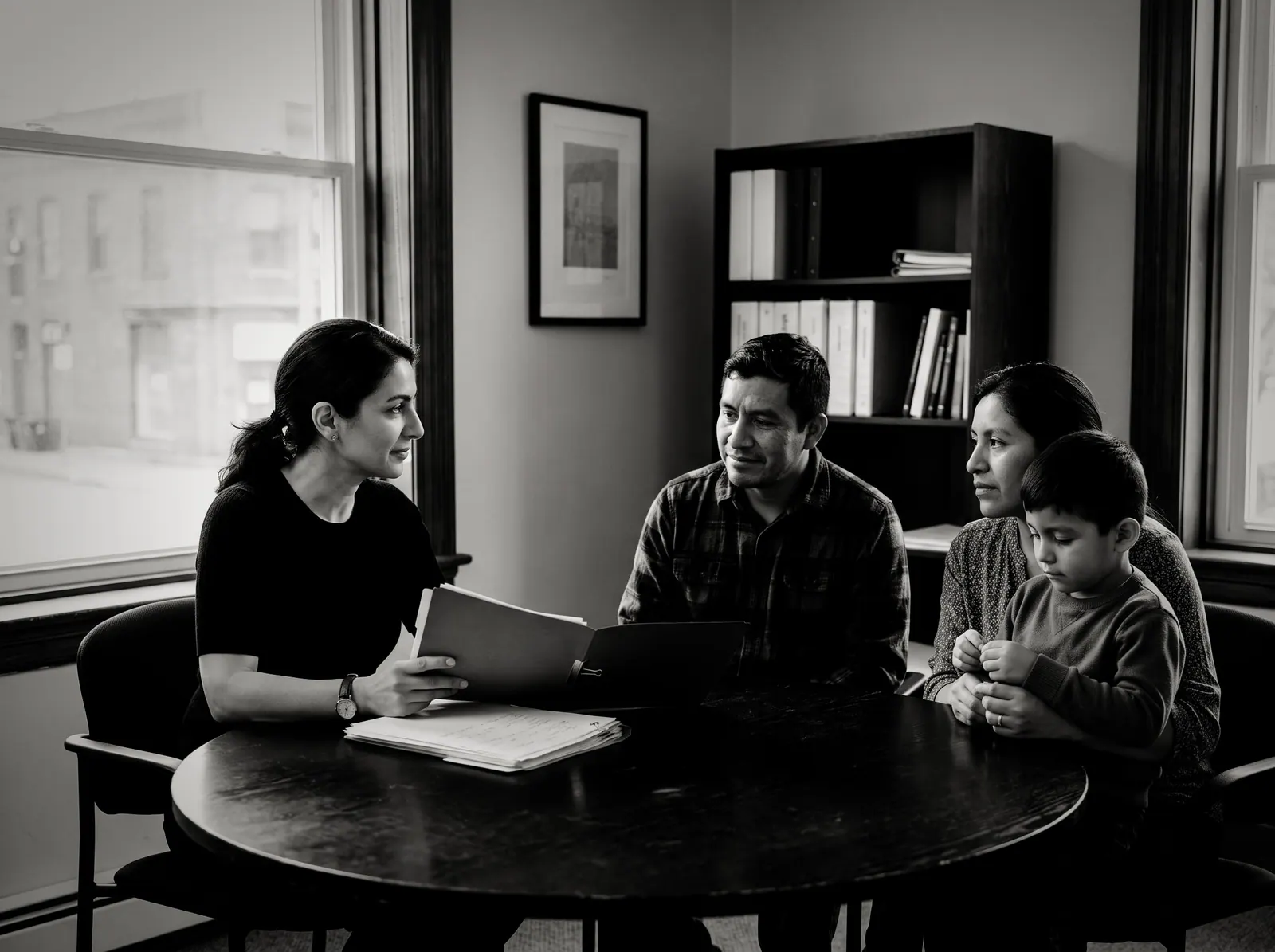
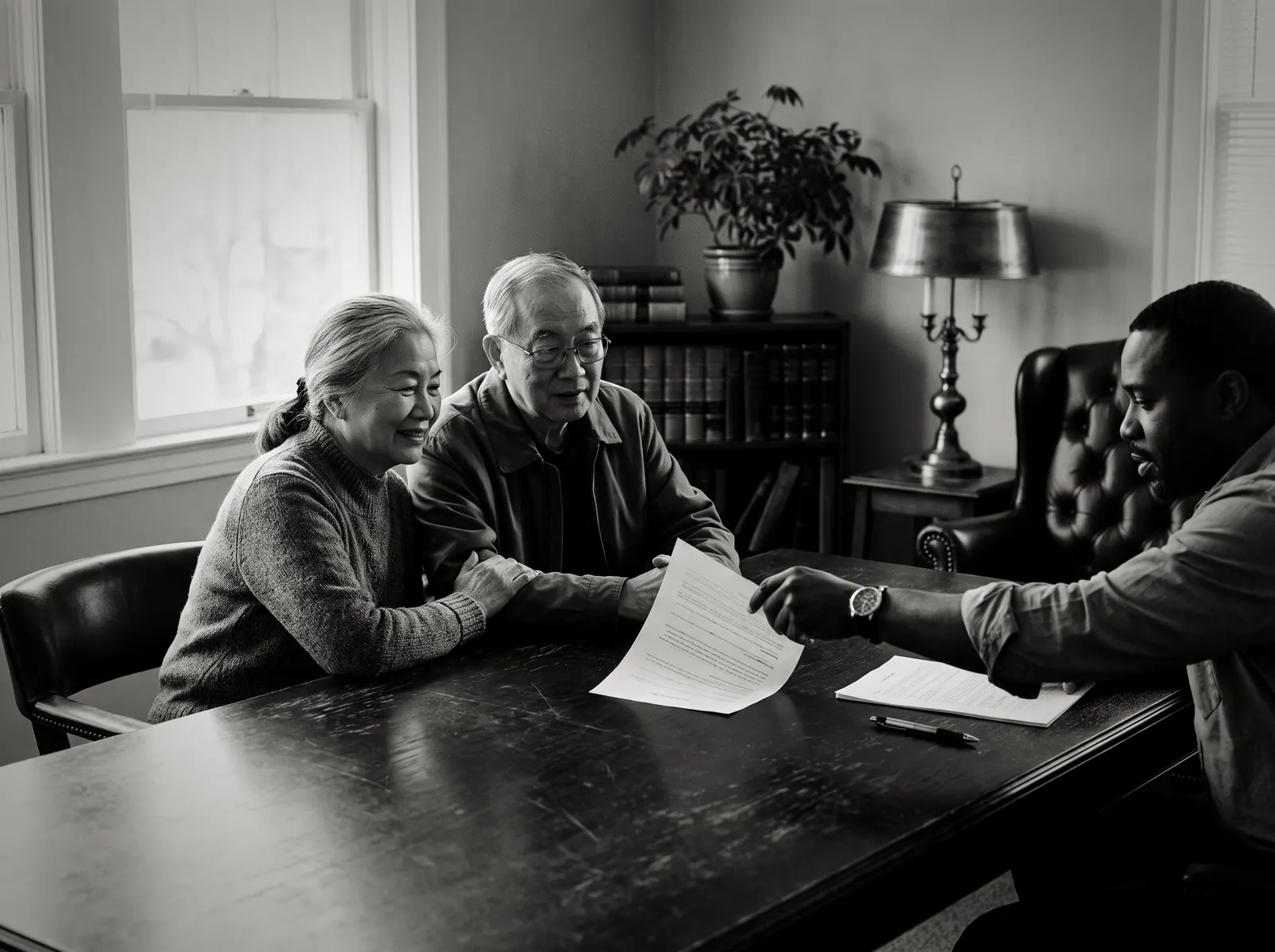
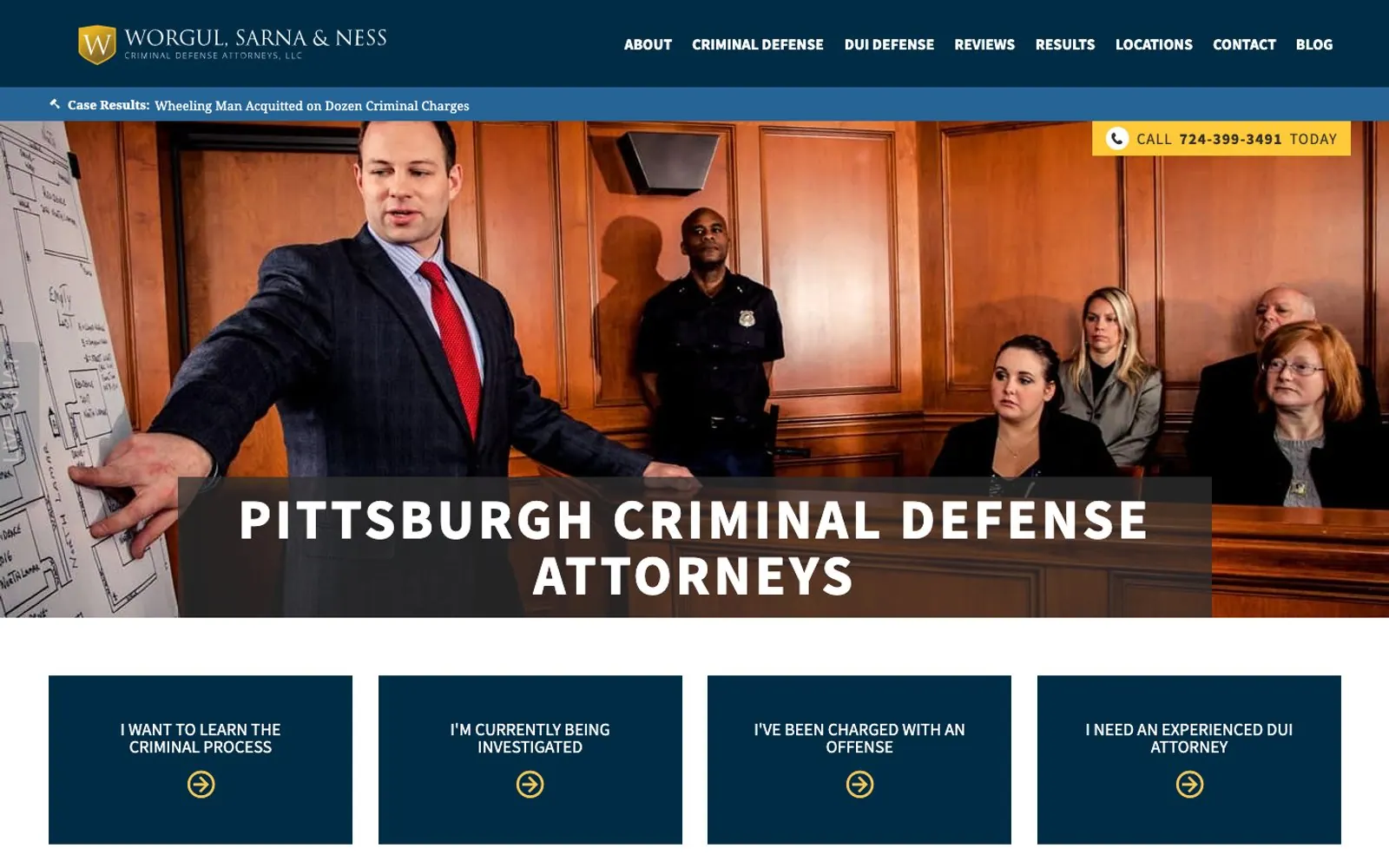
Worgul, Sarna & Ness, Criminal Defense Attorneys, LLC
Criminal defence and immigration, Pittsburgh, PA. It answers 8 of the 8 client questions this edition tests, loads fast on phones and describes its images; like most sites in this study, it has yet to pass text contrast (WCAG 1.4.3). Its overall website score is 79/100. Named as a positive example; every other site in this report is anonymous.
What it does well
- Names its lawyers, each with a profile page of their own
- States where its lawyers are admitted to practise: “Bar Admissions Pennsylvania…”
- Gives each practice area its own page (120 linked from the home or practice page)
- Says what a first conversation costs: “…our office today to schedule a free consultation with a Pittsburgh criminal defense…”
- The phone number is a tappable link, and office hours, 24/7 availability or a response time are stated
- A message form with 4 fields, so a client can ask without calling
- Shows case results or client testimonials
- Shows client reviews, marked up for search engines or through a review widget
- Real phone visitors see the main content in 2.0 s (Chrome UX Report, 75th percentile; good is 2.5 s or less)
- Every image has a text description (WCAG 1.1.1)
- Describes the firm to search engines with LegalService or Attorney structured data
- Clikiti pillar scores of 90 or more: accessibility 90, SEO 100
Where it could still improve
- Usability pillar 52/100
The clients left out
A person using a screen reader, a keyboard, or an old phone on a weak signal is still a prospective client. These checks measure whether the site lets them in.3
Table 1. Technical checks, share of the 125 sites that fail each one.
Method in brief
Read
The home page, up to six pages it links to and one lawyer profile, read as a server delivers them: links, forms, text and markup. The client questions are answered here, by fixed published rules (Appendix A4).
Measure
Google Lighthouse (PageSpeed Insights) in a phone and a desktop render, with Chrome UX Report field data where it exists: load time, contrast and image descriptions. Repeatable.
Review
An expert usability review of each home page against Nielsen's heuristics, used only in the usability part of the score. Every issue must name the heuristic, a severity and the element, or it is dropped.
Read the full methodology Sample, definitions, scoring, precision and limitations, in Appendix A.
For agencies and freelancers
What this means for agencies
what to fix first, and how to pitch it
For small agencies and freelancers who sell websites to small law firms and solo practitioners. We scanned 125 of their websites: 0% score under 60 out of 100, and 76% leave at least three of the questions clients ask unanswered. Here is where the winnable work is, which problems to lead a pitch with, and how to show them without days of spec design.
Who is realistic to win
Family and estate are the most winnable: the lowest median score in this report (75 out of 100), and 0% of them score under 60. Their problems are visible, specific and fixable by a small team.
| Type | Sites | Median | Under 60 |
|---|---|---|---|
| Personal injury | 34 | 77 | 0% |
| Family and estate | 35 | 75 | 0% |
| Criminal defence and immigration | 30 | 77 | 0% |
| Small business and employment | 26 | 79 | 0% |
Score out of 100. "Under 60" is the share of sites that miss most of what a client looks for.
5 problems to lead a pitch with
- 86%Text contrast passes 4.5:1 Quick fix
Raise text contrast to at least 4.5:1 in the theme.
Parts of the site are hard to read, and it is a WCAG failure.
- 68%Loads in under 2.5 s on a phone Build
Resize and compress the hero image, defer scripts, aim for under 2.5 s on a phone.
Your home page takes several seconds to appear on the phone of someone who needs help now.
- 61%Can I reach someone now? Quick fix
A tappable phone number in the header, with office hours or a stated response time beside it.
Someone who needs a lawyer tonight cannot tell from your site whether anyone will answer.
- 57%Are they licensed here? Quick fix
State on each lawyer's page where they are admitted or licensed to practise, and since when.
The first thing a careful client checks is whether you can practise in their state, and the site never says.
- 55%Do clients vouch for them? Quick fix
Show the firm's client reviews on the site, with Review or AggregateRating markup.
Your clients already praise you elsewhere. Your own site does not show it.
Share of sites with the problem. WCAG items are accessibility failures. Every check cites a standard in the method section.
How to show a prospect their problems, and a redesign
- 1Lead with their problem, not your services
Open with one question the site fails, for example text contrast passes 4.5:1 (86% of sites in this report miss it), and show the exact page where the answer should be.
- 2Put a number on it
Compare their site with the sector: across 125 small law firms and solo practitioners sites, the median scores 76 out of 100 and answers 4 of the 8 questions clients ask. A number travels further inside the client than an opinion.
- 3Show the fix without days of spec work
A rough redesign that answers those questions persuades better than a proposal, but it usually costs a designer a day or two per prospect. You can sketch it by hand, or use Clikiti: the scan is free and shows any site's problems in about a minute, and paid plans draft a redesign of the home page from the prospect's own brand, from about $2.33 per pitch.
Scan a prospect's site free No sign-up. You see what the prospect would see.
Show every firm what its clients see
Clikiti reads a firm's site the way a prospective client does, states what it found, and generates the redesign you present before the first call.
See your market on ClikitiMethodology
How this study was designed, who was included, what was measured and how far the results can be relied on. It is written so that an agency can share it with a managing partner who wants to check the evidence behind a pitch.
A1. The research question
When someone with a legal problem looks for a lawyer online, usually on a phone, can they find out who will handle the case, whether that lawyer is licensed, what it costs to talk and how to reach someone quickly?
Population. Solo practitioners, small firms and boutiques in the United States (about 2 to 25 lawyers) in four practice groups: the firms a small or mid-size web agency can realistically win as clients.
A2. Who was studied
The sample was built from local search listings, city by city, then screened so that every site in it is one an independent agency could realistically win.
| Source | What it contributes | Sites |
|---|---|---|
| Local search, personal injury | Personal injury firms found in local search results, city by city | 34 |
| Local search, family and estate | Family law and estate planning firms found in local search results, city by city | 36 |
| Local search, criminal and immigration | Criminal defence, DUI and immigration firms found in local search results, city by city | 29 |
| Local search, business and employment | Small business, employment and transactional firms found in local search results, city by city | 26 |
Included
- A solo practice, small firm or boutique with its own website (not a directory or marketplace profile)
- Based in the United States
- Home page responds and shows the firm it claims to be (each home page title was checked before scanning)
Excluded
- Large firms: Am Law 200 and NLJ 500 firms, and firms with about 50 or more lawyers or offices in three or more states
- National advertising brands that operate across many states under one name
- Legal marketplaces and directory profiles, online legal-document services and lead-generation sites
- Legal aid, nonprofits, public defenders, government and law schools
- Parked, placeholder, password-protected or unreachable sites, and duplicates
| From list to sample | Sites |
|---|---|
| Candidates listed | 144 |
| Removed at screening: the site refused automated visitors (15) | −15 |
| Removed at editorial review | 0 |
| Cohort | 129 |
| Removed because Google returned no phone speed test for the site | −4 |
| Studied in this edition | 125 |
| Region (US Census) | Personal injury | Family and estate | Criminal defence and immigration | Small business and employment | All |
|---|---|---|---|---|---|
| Northeast | 9 | 8 | 8 | 6 | 31 |
| Midwest | 8 | 7 | 7 | 6 | 28 |
| South | 8 | 11 | 8 | 8 | 35 |
| West | 9 | 9 | 7 | 6 | 31 |
| All regions | 34 | 35 | 30 | 26 | 125 |
A3. How the sites were read
Pages. The home page, then for each of six topics (attorneys, about, practice areas, results, reviews, contact) the best-matching link on the home page, and one lawyer's profile page linked from the attorneys page.
Speed and accessibility. Google PageSpeed Insights (Lighthouse) on a mid-range phone profile and on desktop, plus Chrome UX Report data from real visitors over the previous 28 days where Google publishes it for the site.
Crawler conduct. One request at a time to each site, at least 400 ms apart, at most ten pages per site; robots.txt is read and obeyed for every page requested; a site that refuses is left out and never retried. The crawler identifies itself as Mozilla/5.0 (compatible; ClikitiResearch/1.0; +https://clikiti.com).
A4. What was measured
8 questions people with a legal problem ask before they get in touch, answered from what each site publishes, and 4 technical checks against published standards. A check passes only when the rule below is met; anything the crawler cannot confirm counts as not answered.
| Question | Counts as answered when | Standard |
|---|---|---|
| Who will handle my case?Lawyers named, each with a profile | At least one lawyer is named with their own page in an attorneys, team or people section of the site. | Clikiti client question 1 of 8 |
| Are they licensed here?Bar admission or licence stated | A profile, attorneys or about page states where the lawyer is admitted or licensed to practise (for example "admitted to the Ohio bar" or "licensed to practice in Texas"). | Clikiti client question 2 of 8 |
| Do they handle my kind of case?Each practice area on its own page | At least three practice areas each have their own page, linked from the home page or the practice-areas page. | Clikiti client question 3 of 8 |
| What does it cost to talk?Consultation cost stated | The site states what a first conversation costs: a free consultation or case review, a fixed consultation fee, or no fee unless the case is won. | Clikiti client question 4 of 8 |
| Can I reach someone now?Tappable phone plus hours or response time | The home page has a tappable phone link, and the home or contact page states office hours, 24/7 availability or a response time. | Clikiti client question 5 of 8 |
| Can I ask without calling?Message form with five fields or fewer | A message form is in the page as the server delivers it, on the home or contact page, with five or fewer fields to fill in. | Clikiti client question 6 of 8 |
| Have they won cases like mine?Case results or client testimonials shown | Case results, verdicts, settlements or client testimonials are shown on the site. | Clikiti client question 7 of 8 |
| Do clients vouch for them?Reviews marked up or shown in a widget | Client reviews are marked up for search engines (Review or AggregateRating structured data) or shown through a review widget. | Clikiti client question 8 of 8 |
| Technical checks | ||
| Loads in under 2.5 s on a phoneLoads in under 2.5 s on a phone | Real visitors on phones see the main content within 2.5 seconds (Chrome UX Report, 75th percentile). Where Google publishes no visitor data, the phone lab test is used. | Core Web Vitals · LCP |
| Text contrast passes 4.5:1Text contrast passes 4.5:1 | No text on the home page fails the WCAG 1.4.3 minimum contrast of 4.5:1, in either the phone or desktop test. | WCAG 1.4.3 |
| Images have text descriptionsImages have text descriptions | Every meaningful image on the home page has a text description (WCAG 1.1.1). | WCAG 1.1.1 |
| LegalService or Attorney structured dataLegalService or Attorney structured data | The site describes the firm to search engines with LegalService or Attorney structured data. | Schema.org · LegalService |
A5. The website score
Each site's overall score (0 to 100) is Clikiti's website score, rubric 2.0.0. It measures the website, not the firm, and the client questions above do not feed it. It is a weighted mean of five pillars:
| Pillar | Weight | Based on |
|---|---|---|
| Usability | 30% | Checks of the home page for broken links and images, and an expert review of the page as rendered on a phone and on a desktop screen, against Jakob Nielsen's ten usability heuristics. Each issue must name the heuristic, a severity on the Nielsen Norman Group scale and the exact element or wording; issues without all three are discarded, and two independent passes must agree. |
| Speed | 25% | Google Lighthouse on a mid-range phone (60%) and on desktop (20%), and real-visitor Core Web Vitals from the Chrome UX Report (20%) where available. |
| Accessibility | 25% | Google Lighthouse accessibility audits (70%) and Clikiti's own WCAG checks of the served page (30%). |
| Search | 10% | Google Lighthouse SEO audits (60%) and Clikiti's own search checks of the served page (40%). |
| Trust | 10% | Google Lighthouse best-practice audits (40%) and security header checks (60%). |
Within a pillar, each issue costs points by severity (critical, high, medium, low) and by how many times it occurs; issues based on judgement count at 70% of measured ones, and duplicates of the same root cause count once. On the four firm profiles, the number out of 100 is this overall score, and each dot is one check in its group: filled when the site passes it, hollow when it does not.
A6. Precision
With 125 sites, a share reported for the whole sample is precise to within ±8.8 percentage points at 95% confidence (worst case, a 50% share; 1.96 × √(0.25/n)). By type: personal injury ±16.8 (n = 34); family and estate ±16.6 (n = 35); criminal defence and immigration ±17.9 (n = 30); small business and employment ±19.2 (n = 26). Differences between types smaller than these margins should be read as similar. Percentages are rounded to whole numbers; medians are the middle value of the sites in a group.
A7. Quality control
- Every home page in the cohort was fetched and its title checked against the listed firm before scanning
- Detection rules were checked against the evidence they record for a sample of firms in every practice group, and revised before the final run
- Every published figure is recomputed from the data at build time, and a statement in the text that the data does not support stops the build
- Results are published only after automated checks for missing data, anonymity, accessibility of the report itself and the margin of error statement pass
A8. Limitations
- A point-in-time snapshot: sites change, and a site may have improved or declined since it was read.
- Only public pages were read: the home page, pages it links to and one lawyer profile. Client portals, chat widgets and multi-step intake were not tested.
- Answers are read from the page as a server delivers it. Content that only appears after scripts run in the browser (some contact forms and review widgets, for example) is not seen, which the study counts as a gap a search engine or a slow phone would also meet.
- The study reports what a website shows. It does not assess whether any firm complies with the advertising or ethics rules of any state bar, and nothing in it is legal advice.
- Automated accessibility tests find only part of what WCAG covers; keyboard and screen-reader use need a manual audit.
- The sample is a structured list of real, independent firms, not a random draw. Margins of error are given as a guide to precision, not as a guarantee that the results hold for every firm in the country.
A9. Data, licence and corrections
The aggregate results are published as CSV and JSON beside this report under the Creative Commons Attribution 4.0 licence: you may reuse, adapt and share them, including in client proposals, with a credit to Clikiti and a link. No per-site results are published. Corrections and removal requests are reviewed and answered personally; see the end of this report.
Firms in this study
The 125 websites in this edition, by type. This list says who was scanned and nothing more: results in this report are shown only in aggregate or anonymously.
Personal injury (34)
- Adler Law Group, LLCHartford, CT
- Baer Law OfficeDes Moines, IA
- Big River Trial AttorneysBaton Rouge, LA
- Brent Harsh LawReno, NV
- Chain Cohn ClarkBakersfield, CA
- Chhabra, Gibbs & Gustavis, P.A.Jackson, MS
- Combies Hanson, P.C.Boston, MA
- Crary & Domanico, P.S.Spokane, WA
- Fales & Fales, P.A.Lewiston, ME
- Finderson LawFort Wayne, IN
- Heenan & Cook, PLLCBillings, MT
- James A. Fein, AttorneyTucson, AZ
- Johnson Janklow Abdallah, LLPSioux Falls, SD
- Jones, Boykin & Associates, P.C.Savannah, GA
- Kenison Law Office, PLLCManchester, NH
- Knowles Law FirmOmaha, NE
- Lantz & Robins, P.C.Richmond, VA
- Law Office of David I. SchoenWest Windsor, VT
- Law Offices of Jeff MartinTulsa, OK
- LawtonCates, S.C.Madison, WI
- Louis W. Grande Injury LawyerProvidence, RI
- Mann Wyatt Tanksley Injury AttorneysWichita, KS
- McCormick & Murphy, P.C.Colorado Springs, CO
- McMath Woods P.A.Little Rock, AR
- Pisanchyn Law FirmScranton, PA
- Powers & Santola, LLPAlbany, NY
- Rizk LawPortland, OR
- Rossman Law GroupBoise, ID
- Strong Law OfficesPeoria, IL
- The Donahey Law FirmColumbus, OH
- Towey Law PLLCBuffalo, NY
- Uricchio Law FirmCharleston, SC
- Varellas & VarellasLexington, KY
- Will Ferguson & AssociatesAlbuquerque, NM
Family and estate (35)
- Anderson Elder LawWest Chester, PA
- Atkinson & Kelsey, P.A.Albuquerque, NM
- Banas Family Law, P.A.St. Paul, MN
- Burke & Casserly, P.C.Albany, NY
- Cadicina Law, LLCMorristown, NJ
- Colorado Estate PlanningColorado Springs, CO
- David A. Hawley, P.A.Wichita, KS
- Denker Law Firm LLCLee's Summit, MO
- Eric M. Swinyard & Associates, PLLCSouth Jordan, UT
- Franklin & Kyle Elder Law, LLCKnoxville, TN
- Graunke Ayoub LawSeattle, WA
- Hildebrand Law, P.C.Tempe, AZ
- Idaho Elder LawBoise, ID
- Kirker Davis LLPAustin, TX
- Kraayeveld Law Offices, P.C.Grand Rapids, MI
- Lacy Law Office, LLCIndianapolis, IN
- McCormick, Fitzpatrick, Kasper & Burchard, P.C.Burlington, VT
- Miller Cushing Holladay PLLCCharlotte, NC
- Music City Estate LawNashville, TN
- Nennig Law Offices, LLCMadison, WI
- Popovitch Law LLCLexington, MA
- Ramos Law Group, PLLCHouston, TX
- Richter Family Law Group, P.C.Memphis, TN
- Samuels Yoelin Kantor LLPPortland, OR
- Sekella Law, PLLCManchester, NH
- Slepkow Law LLCEast Providence, RI
- Tampa Bay Elder LawLutz, FL
- The Gubinsky Law Firm P.C.Pittsburgh, PA
- The Hive LawBuford, GA
- The Yeatts Law Firm, LLCBirmingham, AL
- Tresp Law, APCSan Diego, CA
- Wagner Law Office, PLLCLouisville, KY
- Ward Family Law, LLCChicago, IL
- Wiles Law Firm, LLCCharleston, SC
- Willick Law GroupLas Vegas, NV
Criminal defence and immigration (30)
- Apsan Law Offices LLCNewark, NJ
- Arca LawMarietta, GA
- Arnold & Smith, PLLCCharlotte, NC
- Banks & BrowerIndianapolis, IN
- Bernstein & Mello, P.L.L.C.Nashua, NH
- Byron Pugh LegalNashville, TN
- Choquette Immigration Law GroupSeattle, WA
- Chris Hammond Law FirmHouston, TX
- Davidson & SeseriChicago, IL
- Edgerton Immigration LawRaleigh, NC
- Elcox LawBoise, ID
- ENTRYLAW (Parrilli Renison LLC)Portland, OR
- Feist Law & Advocacy PLLCMinneapolis, MN
- Goldstein Mehta LLCPhiladelphia, PA
- Jaffe, Hanle, Whisonant & Knight, P.C.Birmingham, AL
- KC Defense CounselKansas City, MO
- Konstantakis Law Office, LLCGreenfield, WI
- Law Office of Marilyn Orbach-RosenbergQueens, NY
- LV Criminal DefenseLas Vegas, NV
- Nemann Law Offices, LLCColumbus, OH
- Perez & Malik, PLLCSan Antonio, TX
- Petrash LawDenver, CO
- Romanovsky Law OfficesBoston, MA
- Salwin Law GroupScottsdale, AZ
- Sammis Law FirmTampa, FL
- SBBL Law (Springstead Bartish Borgula & Lynch PLLC)Grand Rapids, MI
- Serpa Law OfficeBoston, MA
- Vrapi WeeksAlbuquerque, NM
- Woolf & Ross Law FirmEast Hartford, CT
- Worgul, Sarna & Ness, Criminal Defense Attorneys, LLCPittsburgh, PA
Small business and employment (26)
- Aeton Law PartnersHartford, CT
- Anthony Law, LLCColumbus, OH
- As Your CounselPortland, OR
- Bowes, Petkovich & Palmer, LLCGretna, LA
- Colligan Law LLPBuffalo, NY
- Dozier Miller Law GroupCharlotte, NC
- Exceed LegalBoise, ID
- Fleckenstein Young & Pearson, PCRichmond, VA
- Holden Law FirmMinnetonka, MN
- Holmes Business LawPhiladelphia, PA
- Hones Law PLLCSeattle, WA
- Horgan Law, P.L.L.C.Omaha, NE
- J.D. Milliner & Associates, P.C.Salt Lake City, UT
- Joseph C. Russo, P.A.Tampa, FL
- Kane Law OfficeKansas City, MO
- Krupp Law Offices PCGrand Rapids, MI
- Law Office of E.C. Lewis, P.C.Denver, CO
- Law Offices of Christopher Bent, LLCSt. Louis, MO
- M.V. Parker Law, PLLCAlbuquerque, NM
- Moore Law PCNashville, TN
- Schubert Law OfficesManchester, NH
- Tempus Fugit LawBoston, MA
- The Blake Law FirmAustin, TX
- The Forsythe Law FirmAtlanta, GA
- The Potash Law FirmLouisville, KY
- Wick & MaddocksBurlington, VT
About this study
This report is based on automated scans of publicly available home pages, and pages they link to, run on 2026-10-12. Its findings are a point-in-time technical snapshot of each website. They are not a judgement of any firm's legal work, ethics or quality, and automated checks may contain errors. This report is not legal advice, and it is not a judgement of whether any firm complies with the advertising or ethics rules of any bar. Clikiti is not affiliated with, and does not endorse, any firm listed here; trademarks belong to their owners. The report is provided “as is” under CC BY 4.0, without warranty of any kind. Every person in this report's photographs is AI-generated; none is a real person. The one firm screenshot is the featured firm's own home page, shown unaltered.
Remove my firm from this study
We review every request and reply when it's done; removed firms are excluded from future editions.